
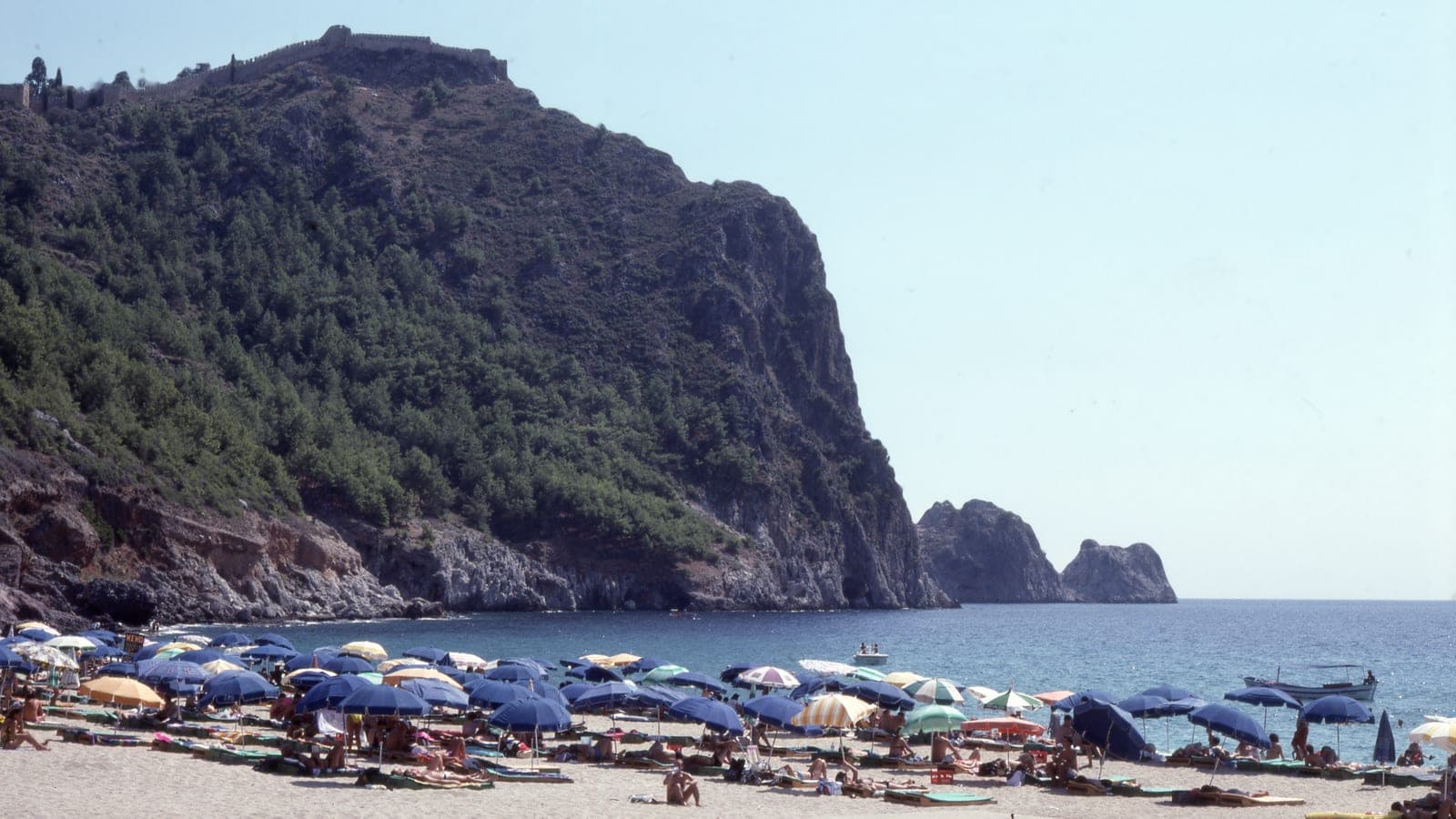
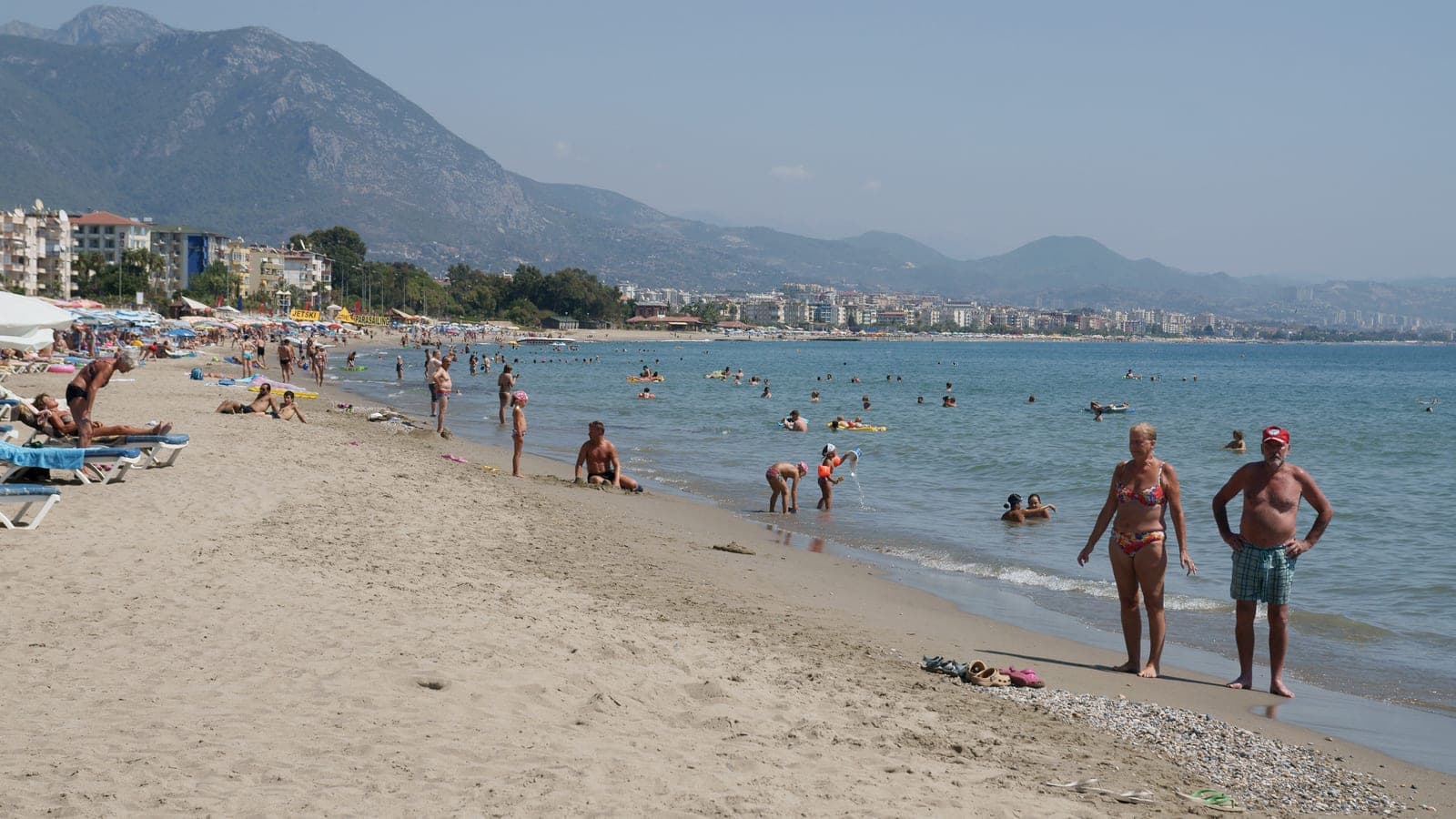
Cleopatra Beach is the stretch of sand everyone photographs, and the one most people get slightly wrong. Every town on this coast has a "best beach", but Cleopatra is the rare one that earns the title. Two kilometres of coarse golden sand on the west side of the castle peninsula, water that turns turquoise two steps in, and a mountain backdrop that makes even bad photos look good.
Why the sand is different
The sand here doesn't stick. It is coarse-grained and almost self-cleaning. You walk off the beach without carrying half of it in your bag. Local legend says Mark Antony had the sand shipped from Egypt as a wedding gift for Cleopatra; geologists say it arrived by sea current from river deltas. Choose the story you prefer.
The seabed matters just as much: it drops quickly to swimming depth, with none of the long shallow wade you get on the eastern beaches. That also means small children need watching. The drop is fast.
Practical facts
- Entry is free; sunbed and umbrella sets cost around €8–10 for the day
- Lifeguards work May to October on the central section
- The western end (toward Damlataş Cave) is quieter than the centre
- Showers, toilets and cafés run the full length of the promenade
- Blue Flag certified, water quality tested through the season
When to go
Before 10:00 the beach belongs to swimmers and joggers; the crowd peaks between 12:00 and 16:00. For the best light, stay for the last hour of the day. The castle rock turns amber and the sea goes glassy calm.
See it from the water
The beach is one thing from a sunbed and another from the sea. Most boat trips around the peninsula pass directly in front of it and stop for a swim at the neighbouring caves. Worth doing once just to understand where you have been lying all week.
Where along Cleopatra Beach to actually settle
Cleopatra Beach is two kilometres long and it is not the same beach at both ends.
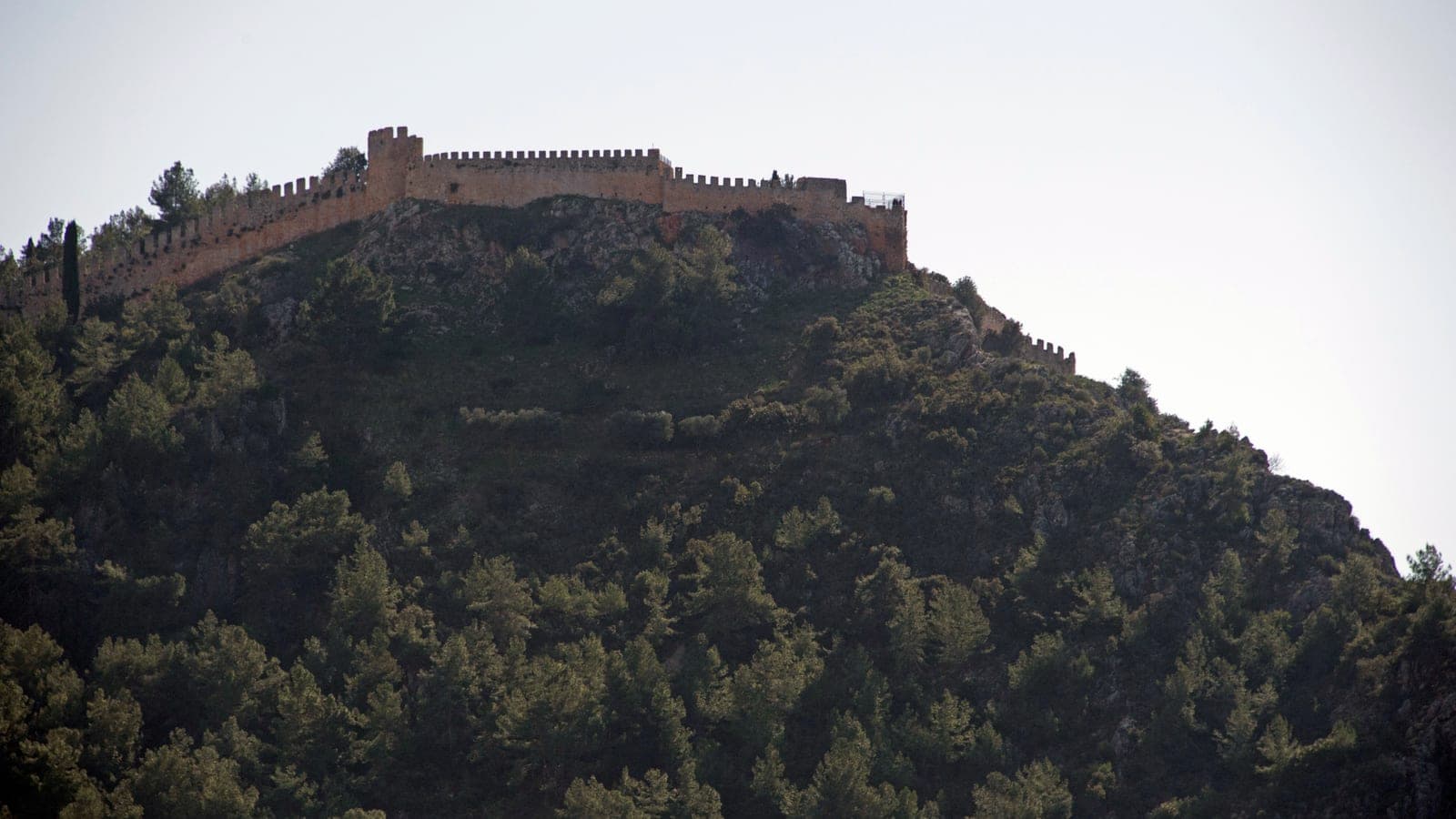
The eastern end, under the castle rock and near the cave, is the busiest and the prettiest, with the shortest walk to cafés, showers and the museum. It is also the first stretch to fill.
The middle is where the beach clubs and water sports operators concentrate. Loud in a good way if that is what you want, and the natural choice for parasailing over the beach.
The western end, towards Konaklı, quietens down noticeably. Fewer facilities, more space, and the same sand.
Small things worth knowing about Cleopatra Beach
- The afternoon wind picks up from about 15:00 and the sea gets choppy on the west side.
- Sunbeds are cheaper the further west you walk, and free if you buy something from a beach café.
- The promenade behind the beach is lit and busy until late, so an evening walk here is safe and pleasant.
- Bring water shoes if you are heading for the rocky sections near the cave.
Comments
Write a comment
No comments yet. Be the first to write one.